US Wholesale Inflation Soars to 6% Amid Iran War
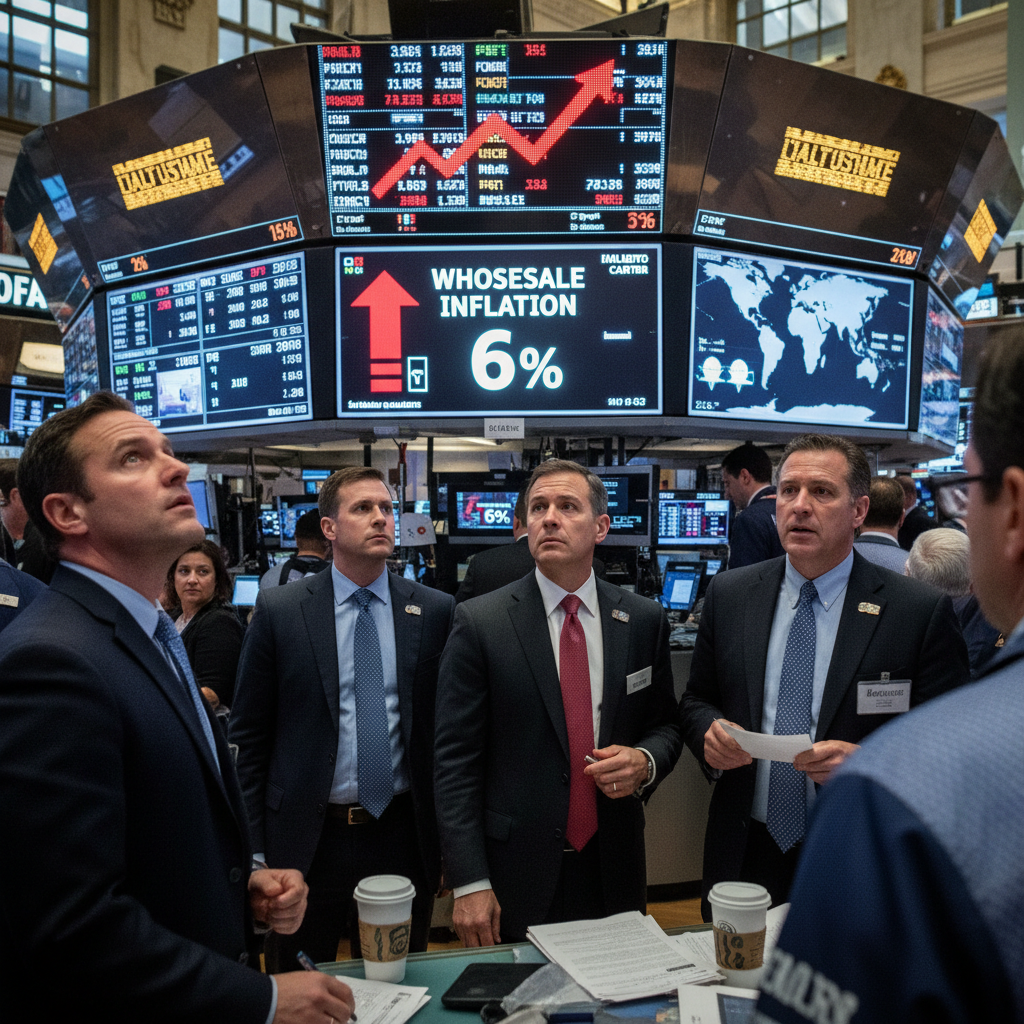
US wholesale inflation has surged to 6%, its fastest rate since Russia's Ukraine invasion, driven by rising fuel and freight costs from the Iran war. This increase signals potential higher prices for consumers.
Key Takeaways
- US wholesale inflation (PPI) hit 6%.
- This is the fastest rate since Russia's invasion of Ukraine.
- Fuel and freight costs, exacerbated by the Iran war, are the primary drivers.
- Higher producer costs typically translate to increased consumer prices.
- This trend puts pressure on central banks and household budgets alike.
Why It Matters
Rising wholesale inflation signals higher consumer prices, impacting household budgets and investment returns.
The financial well-being of every American household is directly threatened as US wholesale inflation, a critical precursor to consumer prices, has hit an alarming 6%. This isn't just a headline for Wall Street; it means the cost of manufacturing and transporting goods for businesses is skyrocketing right now, and those higher costs will inevitably filter down to your grocery bill, gas pump, and everyday expenses.
The Bottom Line
- US wholesale inflation, measured by the Producer Price Index (PPI), has reached 6%.
- This marks the fastest rate of increase since Russia’s full-scale invasion of Ukraine.
- The primary drivers behind this surge are rising fuel and freight costs.
- The ongoing conflict in Iran is cited as a significant factor exacerbating these energy and transportation expenses.
- This increase at the wholesale level typically indicates that consumers will soon face higher prices for a wide range of goods and services.
What's Happening
According to recent reports, the Producer Price Index (PPI) in the United States has climbed to 6%, signaling a rapid and significant increase in the prices that producers receive for their goods and services. This metric is a crucial indicator of inflationary pressures building up within the economy, often serving as a harbinger for future consumer price movements.
This 6% rise represents the fastest acceleration in wholesale inflation since the full-scale invasion of Ukraine by Russia. The main culprits behind this surge are identified as soaring fuel and freight costs. These expenses have been significantly impacted by the geopolitical instability stemming from the ongoing Iran war, which has disrupted global energy markets and supply chains, making it more expensive for businesses to produce and transport goods.
Why This Matters for Your Money
When businesses face higher costs for fuel, raw materials, and shipping—as reflected by the 6% jump in the Producer Price Index—they rarely absorb these costs entirely. Instead, a substantial portion is typically passed on to consumers in the form of higher retail prices. This means that the money you earn will buy less, effectively eroding your purchasing power and making everything from your weekly grocery haul to big-ticket purchases more expensive.
This trend directly impacts your household budget, necessitating a careful review of spending habits. Persistent wholesale inflation can also influence broader economic conditions, potentially leading to higher interest rates if the Federal Reserve decides to intervene to cool down an overheating economy. For your investments, sectors that can pass on costs, like energy or certain consumer staples, might perform differently than those more sensitive to consumer spending pullbacks or rising input costs. Keeping a keen eye on these trends is essential for making informed financial decisions.
Action Steps
- Review Your Budget: Re-evaluate your household spending for areas where prices might increase, particularly transportation, food, and goods dependent on global supply chains. Identify potential cuts or adjustments.
- Optimize Transportation Costs: With fuel and freight costs rising, look for ways to reduce personal fuel consumption. Consider carpooling, public transportation, or planning errands more efficiently to minimize trips.
- Shop Smart & Strategize: Compare prices more diligently for everyday items, consider buying non-perishable goods in bulk when discounts are significant, and look for sales or generic brands.
- Assess Your Investments: Consult with a financial advisor to ensure your investment portfolio is adequately diversified and potentially includes assets that historically perform well during inflationary periods, such as Treasury Inflation-Protected Securities (TIPS) or certain commodities.
- Build or Boost Emergency Savings: A robust emergency fund becomes even more critical when living costs are rising unexpectedly. Aim for at least 3-6 months of essential expenses in an easily accessible savings account.
- Evaluate Debt: If you have variable-rate debt, consider strategies to reduce it or refinance into fixed-rate options before potential interest rate hikes make it more expensive.
Common Questions
Q: What is wholesale inflation, and how is it different from consumer inflation?
A: Wholesale inflation, measured by the Producer Price Index (PPI), tracks the average changes in selling prices received by domestic producers for their output. Consumer inflation, measured by the Consumer Price Index (CPI), tracks the average change over time in the prices paid by urban consumers for a market basket of consumer goods and services. PPI often acts as a leading indicator for CPI.
Q: How does the Iran war directly cause higher fuel and freight costs in the US?
A: Geopolitical conflicts like the Iran war can disrupt global oil production and shipping routes, leading to uncertainty in energy markets. This uncertainty can drive up crude oil prices and, consequently, the cost of gasoline, diesel, and jet fuel, impacting transportation and freight expenses worldwide, including in the US.
Q: Will the Federal Reserve likely raise interest rates in response to this wholesale inflation?
A: Significant and persistent wholesale inflation like the current 6% rise puts pressure on the Federal Reserve to consider tightening monetary policy, including potential interest rate hikes. Their goal is to maintain price stability, and strong inflationary signals at the producer level suggest that broader consumer inflation could follow, which the Fed would aim to curb.
Ciro's Take
This 6% jump in wholesale inflation isn't just an abstract economic indicator; it's a direct signal of what's coming to your household budget. The immediate connection between geopolitical events, like the Iran war, and the price you pay for everyday goods can often feel distant, but this data makes it starkly clear. Higher fuel and freight costs at the producer level don't just disappear; they get absorbed or, more commonly, passed on to you, the end consumer.
My advice remains consistent: stay proactive, not reactive. While you can't control global conflicts or their immediate economic fallout, you can control your financial preparedness. Understanding that the cost of doing business has risen dramatically means anticipating higher prices at the store and adjusting your spending and saving strategies accordingly. Don't wait for your next grocery bill to shock you; start reviewing your budget and looking for efficiencies today.
This article is for informational purposes only and is not financial advice.
Sources
Based on reporting by Financial Times.
Source: Financial Times