Weak Jobs Report Adds Uncertainty to Fed's Rate Decisions
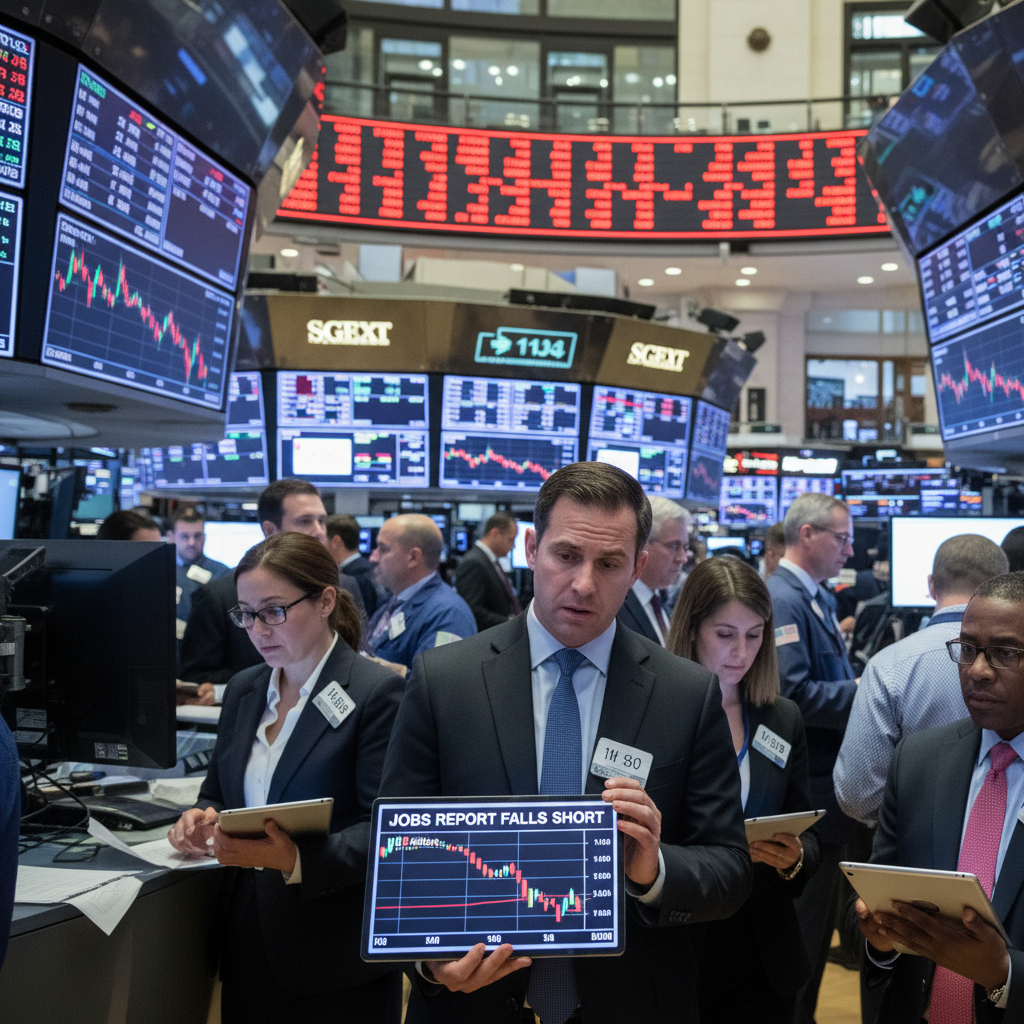
A recent weak jobs report has complicated the Federal Reserve's outlook on interest rates, creating uncertainty for borrowers, savers, and the broader economy.
Key Takeaways
- Weak February jobs report complicates Fed's interest rate decisions.
- San Francisco Fed President Mary Daly confirms difficult policymaking environment.
- Uncertainty affects mortgage rates, loan costs, and savings account yields.
- Fed balances maximum employment with stable prices, a challenge with mixed data.
- Consumers should review debt, savings, and investment strategies.
Why It Matters
The Fed's uncertain path on interest rates directly impacts consumer borrowing costs, savings returns, and overall market stability.
The path forward for U.S. interest rates just got blurrier. Following a surprisingly weak jobs report, a key Federal Reserve official has indicated that the policymaking environment has become significantly more difficult. This uncertainty directly impacts everything from your mortgage payments and savings account returns to the broader economic outlook, making it crucial for everyday Americans to understand what's at stake.
The Bottom Line
- Weak Jobs Report: The February jobs report showed signs of softening in the labor market, raising concerns about economic growth.
- Fed's Dilemma: San Francisco Fed President Mary Daly noted this report complicates the Federal Reserve's decision-making on future interest rate adjustments.
- Dual Mandate: The Fed aims to balance its two goals: achieving maximum employment and maintaining stable prices (controlling inflation).
- Interest Rate Impact: This policy uncertainty can lead to volatility in financial markets and influence borrowing costs for consumers and businesses.
What's Happening
According to comments made by San Francisco Federal Reserve President Mary Daly to CNBC on Friday, the recent weak February jobs report has introduced a new layer of complexity into the central bank's interest rate deliberations. Daly explicitly stated that this report contributes to an already challenging environment for policymakers.
The Federal Reserve operates under a dual mandate: to foster maximum employment and to maintain price stability. A weaker-than-expected jobs report suggests that the labor market, a key pillar of economic strength, may be cooling more rapidly than previously thought. This creates a dilemma for the Fed. On one hand, persistent inflation might argue for keeping interest rates higher or even raising them further. On the other, a weakening jobs market could signal a need to pause rate hikes or even consider cuts to prevent a deeper economic slowdown. The current data points are not providing a clear, unified signal, making the Fed's next steps less predictable.
Why This Matters for Your Money
The Federal Reserve's interest rate decisions are arguably the most impactful financial policy for the average American. When the Fed signals uncertainty, it ripples through the entire economy, directly affecting your wallet and financial planning. For borrowers, this means potential volatility in mortgage rates, car loan rates, and credit card Annual Percentage Rates (APRs). If the Fed holds rates higher for longer due to inflation concerns, borrowing costs remain elevated. If the weak jobs data pushes them towards cuts, future borrowing could become cheaper.
Savers and investors are also directly impacted. Higher interest rates typically mean better returns on savings accounts, Certificates of Deposit (CDs), and money market funds. Conversely, rate cuts reduce these returns. For investors, uncertainty about monetary policy can lead to stock market fluctuations. Industries sensitive to interest rates, like housing and manufacturing, are particularly vulnerable to these shifts. Understanding the Fed's evolving stance allows you to anticipate potential changes in these areas and adjust your financial strategy accordingly.
Action Steps
- Review Your Debt: With interest rate uncertainty, consider consolidating high-interest debt or exploring fixed-rate options if you have variable-rate loans.
- Monitor Savings Rates: If you have significant cash savings, compare high-yield savings accounts and CD rates regularly to ensure you're earning competitive returns.
- Assess Investment Portfolio: Speak with a financial advisor to ensure your portfolio is diversified and aligned with your risk tolerance, especially in periods of economic uncertainty.
- Budget for Volatility: Acknowledge that gas prices, borrowing costs, and investment returns might fluctuate. Build a financial buffer to weather unexpected changes.
- Stay Informed: Keep an eye on future jobs reports, inflation data, and statements from Federal Reserve officials to anticipate potential shifts in monetary policy.
Common Questions
Q: What is the Federal Reserve's primary goal with interest rates?
A: The Federal Reserve has a dual mandate: to achieve maximum employment and to maintain stable prices (control inflation). Their interest rate decisions aim to balance these two objectives.
Q: How does a weak jobs report affect the Fed's interest rate decisions?
A: A weak jobs report suggests the economy might be slowing down, potentially reducing inflationary pressures but also raising concerns about employment. This can make the Fed hesitant to raise rates further or even prompt consideration of rate cuts, depending on the severity of the slowdown and inflation outlook.
Q: Should I change my financial plans immediately due to this news?
A: While staying informed is crucial, immediate drastic changes are rarely advisable. Instead, use this information to review your current financial situation, assess your debt and savings strategies, and ensure your long-term plans account for potential economic shifts. Consult with a financial advisor for personalized guidance.
Sources
Based on reporting by CNBC.
Source: CNBC